Loading
(Counter)Atlas of Trace
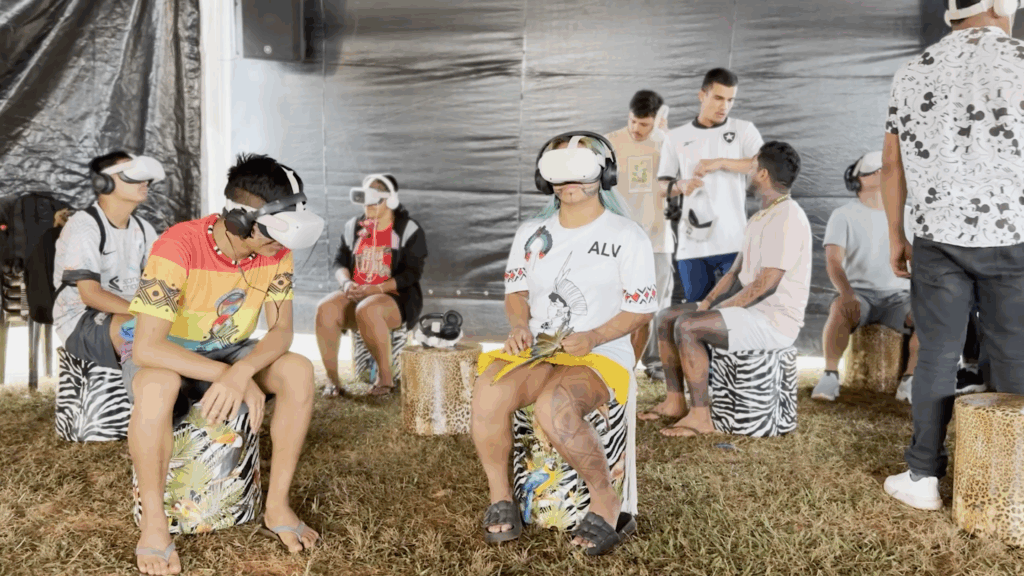
Brasília, Distrito Federal, Brazil
Traces as resistance: Tracing the ways Indigenous communities are utilising multimedia technologies as a method of resistance at Acampamento de Terra Livre
Activism
Decolonization
Environmentalism
Ethnography
Inclusivity
Justice
Multimodality
Post-Imperialism
This STSM explored the ways that Indigenous communities in Brazil engage with technologies including film, photography and VR to trace - and in doing so resist - the ongoing displacement, ecocide and genocide they face.
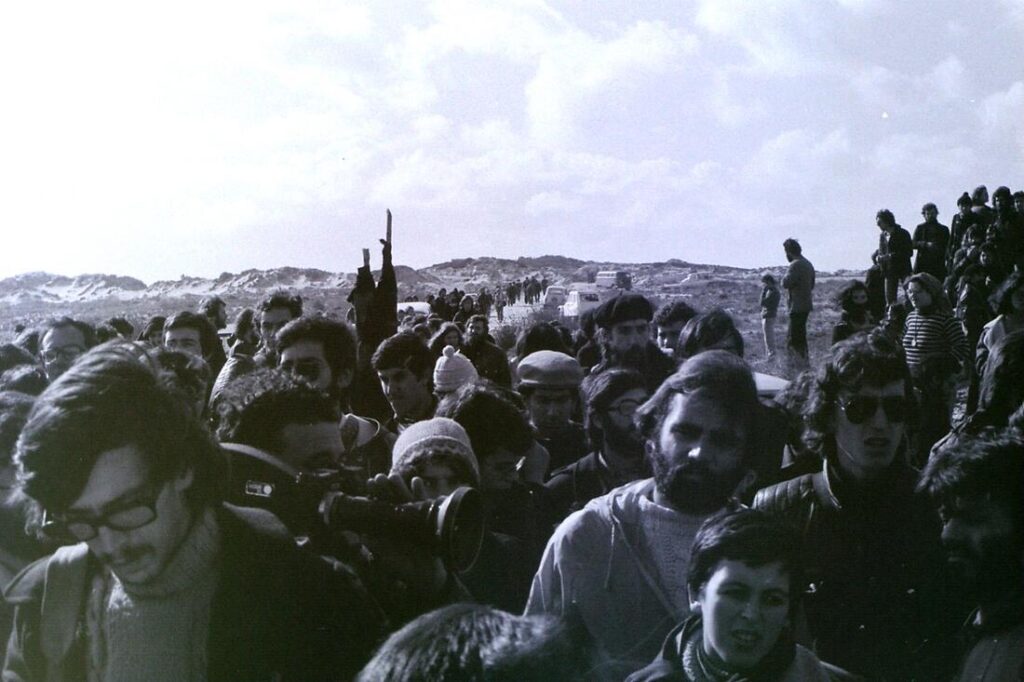
Distrito de Leiria, Portugal
Tracing environmental films in Portugal
Activism
Archives
Climate Change
Critical Heritage
Ecology
Experimentation
Extractivism
Post-Imperialism
This image of an anti-nuclear demonstration shows that environmentalist audiovisual productions existed in the aftermath of the Carnation Revolution. By observing the green tendencies of Portuguese revolutionary cinema, it is possible to provide diverse perspectives and nuances to the hegemonic revolutionary narratives about revolutionary audiovisual in that country. However, tracing and studying these productions through media libraries and archives remains challenging.
Paris, Paris, France
Tracing Cooperation. Early Super 8 film workshops in Bolivia
Archives
Coloniality
Culture Work
Decolonization
Ethnography
Extractivism
Landscape
Memorialization
Multimodality
Peripheries
Restitution
Spectrality
Technology
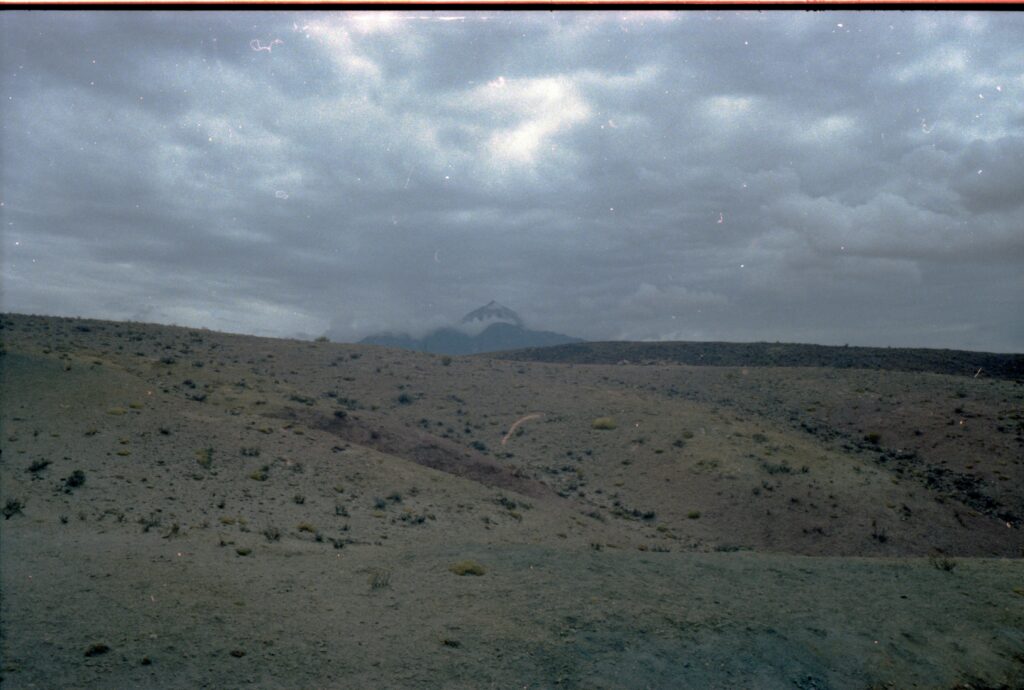
“Tracing Cooperation” is an archival project that explores film workshops in Latin America as complex sites shaped by resistance, international solidarity, dependence and extraction. Focusing on the 1983 Miners’ Film Workshop, an unprecedented experience developed in the tin mining regions of Bolivia, this project engages with its archival documentation held at the Ateliers Varan, the French film school that co-organised this initiative. In so doing, it shows how technological obsolescence, shifting diplomatic policies and neoliberal policies contributed to shaping the films, but also their later circulation and archival conservation.
Cetinje, Central Region, Montenegro
Reliefs – traces through time, past and present
Archives
Critical Heritage
Decolonization
Ethnography
Justice
Landscape
Memorialization
Spatial Justice
Technology
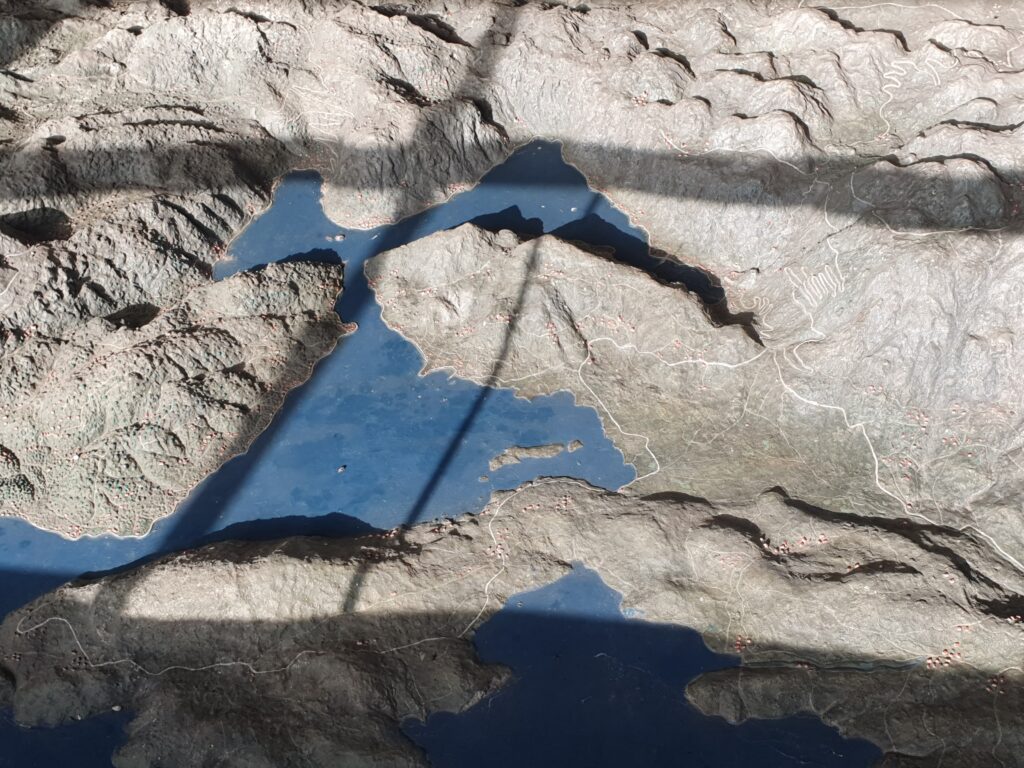
Based on the analysis of a historical three-dimensional terrain relief of the country of Montenegro from 1916/17, and Ivana Radovanović's sculptural work "Oh future time, are you alienated from me" (2022), this project examined cartographic methods and "reliefs" about their suitability for the research of “historical traces”, but above all for the examination of social and spatial hierarchies and political power relations.

Ventimiglia, Liguria, Italy
Northern Stars
Activism
Borders
Death
Justice
A poetic work of art with activist aims, a path made of phosphorescent stones that glow at night and help migrants find their way along the border between Italy and France.
Federacija Bosna i Hercegovina, Bosnia and Herzegovina
Mostar: Urban traces and sustainable futures
Archives
Critical Heritage
Culture Work
Inclusivity
Landscape
Memorialization
Nostalgia
Peripheries
Post-conflict
Restitution
Spatial Justice
Sustainable Tourism
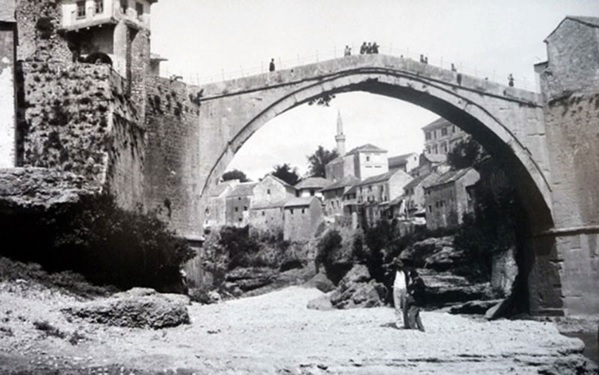
The Old Bridge in Mostar, Bosnia and Herzegovina, is more than a restored monument, it’s a living trace that whispers lessons of the past and challenges us to shape the future. The traces of the Old Bridge are extensive through time and condensed with emotions and opposing naratives. The Old Bridge revives memories, ignites emotions, while also bringing hope for a reconciliated past and an emergent future.
![Colorful mosaic with the title "Chicano legacy 40 [years]", depicting the civil rights icon Cesar Chavez, a female spirit, a group of protesters, and Chicano Park](https://tracts.cooperlovano-staging-site.blog/wp-content/uploads/2025/08/20200220_163918-1024x576.jpg)
San Diego, California, USA
Tracing Masculinity in the Californian Borderlands
Activism
Coloniality
Culture Work
Anxieties surrounding manhood, race and ethnicity, and gun rights mark the current turn towards authoritarianism in the U.S. Police violence, gang wars, and “spiritual genocide” (Rodríguez 2023) often traumatizes, emasculates, and dehumanizes Southern Californian Latino and Chicano men, while disrupting their family and community bonds. Within community defense organizations, racialized men have an opportunity assert their authority. What role do civil rights memories play in this context? What tensions emerge in diverse individuals' struggle for manhood, fatherhood, and respect?
Trace
This counter-atlas approaches trace as a substance, using metaphor to capture the elusive complications of discussing traces, where boundaries that divide the event from the structure blur and dissolve. The materiality of substance possesses specific qualities while remaining inherently under-defined, indeed undefinable. It can mean an essence (something intangible) or a physical, concrete, and palpable object-like phenomenon. To get to the “substance of the matter,” to substantiate an argument. Substance, however, is not just the heart of something; it is also the medium through which we come to understand or perceive something in the first place. Trace can be the substance in which an imprint is apparent. Sustances can also hold absences, voids, things unsaid. Trace as substance invites us to confront its contradictions: part essence, part object, and always a mercurial in the places, sites, and temporalities it inhabits. This counter-atlas traces, tracks, counter-maps, and brings into view the complexities of trace as an epistemological, methodological, and ethical imperative.
Keyword definitions
To act, to activate, to action. Collective labor to bring about radical change. Activism implies forms of action that seek to make visible and to remedy contemporary crisis. These crises may also speak to historical experience and forms of struggle that extend across temporalities and geographies of distance.
Collections of images, objects, and documents that may be preserved and cared for by institutions, persons, or collectivities. Often implicating forms of catalogization and hierarchical structures, archives speak to both presence and absence, the seen and the unseen, the narrateable and the silent. Archives are as much about what is collected and kept, as they are about the power structures that make such collection feasible. The reveal what lies behind the desire to keep and protect, as well as the anxieties around what has been lost. As such, they are spaces particularly apt for reflecting on trace and the multitude of approaches for illuminating the politics of (in)visibility.
A line, an edge, a boundary. Borders are geopolitical demarcations that speak to divisions between nation-states, territories, and communities. Often resonating with the regimes that control their permeability and visibility, borders are characterized by violence, surveillance, and control. They are also spaces of transit, movement, and migration.
The land, sea, and area are increasing a rapid increase in average temperatures as a result of the historical and ongoing release of gases, such as carbon dioxide, that are then trapped in the Earth’s atmosphere. In common usage, climate change describes this phenomenon on global warming and its effects on the Earth’s climate system. Climate change is a crisis, indeed, an emergency, and its effects are felt across political, economic, and social scales.
The endurance of the power structures, patterns, and hierarchies—the persistance of ideas, dynamics, and everyday sociality—generated and sustained by the phenonmenon of colonialism and the project of empire. The durable continuance of conlial logics that shape social relations, knowledge systems, and ways of being. Often linked to glonbal structures ofpower that ensure exploitation, extraction, and racial discrimination.
Both tangible and intangible, heritage refers to the assets that a collectivity or society inherits from past generations. Alone, the concept speaks to property regimes, their endurance, and their ability to shape social relations and the production of knowledge. Critical heritage focuses attention on how “heritage” as such is constructed, conceptually used, and contested in the present to identify how ideas about inheritance, property, and ownership play an active role in shaping power relations, identities, and claims.
Labour relations within the art system are based on violence, precariousness, and the reproduction of the social order. If this reality is extensible to all forms of capitalist labour, in the case of the art sector it has to be added to the operation of class erasure and the invisibilisation of the material conditions of artists and other cultural producers. The utopia of autonomy and flexibility (which has only brought 24/7) and the fiction of meritocracy, which creates the mirage of equal opportunities, are in reality nothing more than alibis to justify structural inequality and social injustice.
Popularly defined as the end of life of a person or organism, death implies an association with forms of expiration, with endings, and points of conclusion. Death, however, is a social phenomenon. It marks the emergence of social relations that respond to the causes and effects leading up to the passing of a person or group. Tracing the rituals and forms of sociality that emerge in the aftermath of death make it possible to understand how individuals and communities make meaning in contexts marked by violence, extraction, and change.
Formally defined as the process by which a state withdraws from a former colony, leaving it independent, decolonization is also used to describe ohter processes of liberation, including freeing institutions, discoureses, or spheres of activity from colonial logics, hierarchies, and modes of categorization. A complex longitudinal, enduring process, decolonization is a cultural, social, epistemological, and political process that often implies a violent, but necessary restructuring of social life, leaving us to ask if complete decolonization is possible? Decolonization must also be understood in relation to collective calls for anticolonialism in all its forms.
Defined as the relations of organisms to one another and to their living and non-living environments, ecology speaks to forms of relationality. Interactions between humans, animals, plants, and the more-than-human. To flows of energy, forms of interconnection, and interdependence. Tracing ecology is to trace acts of correspondence and the sustainability of relationships between the animate and inanimate, to ideas about kinship and association, and to (dis)connections and to the politics and forms of sociality to emerge from these complex webs of relationality.
Both an ideology and a broad, heterogenous social movement, environmentalism seeks to protect, preserve, and improve the natural environment and the Earth’s ecosystems while also sustaiing life and ecological forms of relation. Environmntalism’s multiple histories are often situated, and its contemporary iterations often articulate responses to the current climate emergency. See also climate change.
A methodology and form of producing knowledge—be it textual or otherwise—traditionally linked to the discipline of anthropology. Rooted in forms of immersive observation, ethnography is the process and form of producing cross-cultural knowledge while eschewing claims to scientific objectivity. Etymologically, ethnography refers to writing about a particular group or collectivity. To write culture, to write nation. Its contemporary iterations critique this positionality, seeking to elucidate the complex ways in which knowledge about social groups and cultures is brought into being.
To test, to trial, to probe. Those scientific procedures deployed to generate discoveries, test hypotheses, or demontrabte the irrefutability of facts. Concurrently, experimentation connotes a willingness to think outside the box, to engage withmethods and ideas as a point of discovery. As a term, it holds space for opposing operations and sentiments: desires to prove facts and the celebration of objectivity, but also the willingness to test ideas and explore the unknown.
To extract is to wrest and squeeze—to extricate and extort. Extractivism in the economic system and its associated practices used to remove and obtain large quantities of natural resources. Often minimally processed, these resources are rapidly launched into circulation with the aim of generating profit. Inextricable from colonial and capitalist systems, extractivism can also refer to the usurpation and use of Indigenous forms of knowledge, the destruction of local ecologies, and the capture of digital and financial data.
Straddling the scientific and the legal, forensics are the set of methods and practices linked to the collection of evidence capable of elucidating crimes. The twentieth century, was characterised by mass violence, genocide, and human rights violations worldwide. These practices have continued until our present. Since the 1980s, drawing on tools unique to physical anthropology and later DNA biology and conflict archaeology, interdisciplinary teams have used science-backed methods to trace and track—to unearth and illuminate—the mechanics of repression. While in some contexts, the resulting evidence is recognized by courts of law and other official bodies, in others, this evidence is only legible to the courts of public opinion. It is this forum, as described by Eyal Weizman and Thomas Keenan, that is fundamental to producing new forms of knowledge about violent pasts.
Socially constructed characteristics, qualities, or modes of behaving that connote particular experiences with or specific claims to a particular gender identity. While these identities may often be discussed in relation to male or female sex, the definition of gender and gender identity exists on a spectrum and must be understood beyond simplistic binaries. In this sense, gender is fluid and ever-changing and is directly linked to particular ideologies, claims, and counter-claims.
To include, to incorporate, to embrae. The opposite of exclusion, inclusivity is the practice of leveling the playing field, permitting polyphony over the singular, broadening rather than shutting down. To insist on equality of access to opportunities and resources, but also to aquate, appropriate, and just forms of visibility.
That which is unequal, imbalanced, and not in sync. It speaks to a difference in scale, degree, or circumstance. Indeed, differences in form. A lack of equality, inequality is often entnagned with colonial, capitalist, and authoritarian modes of social organization. It denotes a lack of regularity on the surface, but also structural dissonance and disorganization. To remedy inequality is to also address the aftereffects of longstanding forms of domination and repression.
The introduction and embrace of new methods, ideas, and modes of producing knowledge. Innovation, like invention and experimentation, requires a willingness to move beyond, indeed, imagine other possibilities and forms of engagement. This has particular impications for the intersection between methodologies—most often in from the humanities and social sciences—and creative, artistic practices and modes of expression. In some cases, innovation can be extractive. As such, it is important to pause on the power dynamics inherent to innovation and the claims staked in its name.
The outcome of creativity, resourcefulness and imagination, invention refers to a process, device, or form of doing that has been created in response to a need or absence. Often associated with originality, uniqueness, and vision, invention is used to describe innovations that respond to a need. It also speaks to the fabricated, the made up, and the fantastic. In this sense, the power of invention also lies in its potential as a tool of fabulation, a response to what is not there or cannot be seen, a willingingness to create alternative political and social futures.
Often used to refer to judicial recognition of injustice and/or acts of violence, justice can also be sought in other social contexts, through other institutions and sites of resistance. At once aspirational and necessary, justice and the processes by which it is sought are complex arenas for the making and staking of claims. Inhabiting these spaces, pondering their complexity, makes it possible to examine how forms of resistance and liberation are articulated and asserted. Justice is not always adequate or fair. However, the claims made in its name are often key sites for understaind attempts to make visible, narrateable, indeed identifiable exploitation, repression, tyranny and its effects across time and space.
The visible features of an area of land, its landforms, and how they integrate with natural or man-made features. Often considered in terms of their aesthetic appeal, landscapes include the physical elements of geophysically defined landforms: mountains and hills, rivers and lakes, ponds and seas, valleys and vales. Landscapes also include those living elements that inhabit and cover specific lands, as well as those human elements built to respond to the uses, needs, and structures of daily life. Rural and urban, natural and industrial, built and imagined, landscapes are multiple, denoting the complexity of space, place, and their social and political construction. Increasingly, landscapes and -scapes more broadly, are used to denote a particular field of action, interaction, and relation. They are useful for conceptualizing and analyzing large-scale, interconnected phenonmenon in which objects, ideas, and media are circulated and exchanged. Terms such as landscapes of conflict, mediascapes, and weaponized landscapes speak to this phenomenon.
To mark through ritual action and/or material intervention, events and happenings—but also, lives and struggles—from the past. A process of preserving or publicly commemorating occurrences, things, and persons fro a past that contines to resonate in the present. As a consequence, memorialization is often entangled with attempts to produce history—be it an official, dominant narrative one or subaltern, silenced ones that have yet to be recognized. As such, practices and sites of memorialization are often rich arenas in which to track how calls for reparation and reconciliation—restitution and repair—are articulated and how these articulations change both public space and knowledge production practices. See also justice.
The use, engagement. with, and deployment of forms of analysis expressee through and across different media. At once method and form—oth mediation and articulation–multimodality speaks to methos that are inventive, experimental, and multisensorial and forms of knowledge prodution that celebrate communication beyond textual, written forms. See experimentation and invention.
Longing and affection for something firmly rooted in the past, yet insistent in its presence, nostalgia evokes sentimental, wistful feelings often entangled with individual and collective forms of memory and their associated practices. The affective power of nostalgia lies in its unprecedented ability to mobilize the masses through shared practices, rituals, and forms of action, as well as through the memory narratives and political desires that emanate from them. Perhaps, too, it can be harnessed to imagine and enact worlds otherwise.
At the margins, inhabiting a perimeter, occupying the fringe. To be peripheral is to be an outlier; it is to insist on the outer edges as a space for articulating forms of resistance. Peripheries undoubtedly point to their opposite—centers—directional descriptors whose connotations speak to the durability of power and its structures, to forms of inclusion and exclusion, and to the articulation of subaltern identities and their struggles. In practices of counter-mapping, peripheries may also become the center, challenging shared understandings of what is central, pivotal, and nucleaic.
A term used to identify “devastating transformations of diverse kinds,” resulting from “extractive and closed plantations” (Haraway 2015), plantationocene speaks to shifts in how the humanities, social sciences, and arts engae with, track, and describe planetary transformations that are both dynamic and uneven—both forceful and subtle—whose roots reach back to plantations, the use of slave labor, and the ways in which these systems of domination have been used as prototypes for other forms of colonial and capitalist see extraction.
An adjective used to describe situations, places, and contexts shaped by histories of violence conflict that more often than not are recent, but that can also be distanced in time and space. The “post” in post-conflict speaks to the afterness of forms of sociality and practices of enunciation, but also to the very duration of conflicts whose effects continue to exert their presence in the here and now.
The period that follows the end of empire, post-imperialism also refers to the articulation of new forms of sociality, new political formations, and the reorganization of everday life in the aftermath of imperial projects. Like post-conflict, this term uses “post” to signal the end of something but also its durational presence in contemporary life. It is as much about the articulation of new forms and structures as it is about the endurance of imperial forms of thinking, making, and doing.
To restitute is to return, to replace, to yield. In the context of critical heritage and museum practices, restitution refers to the return of objects extracted through forms of colonial usurpation, dispossession, and ownership. In this sense, restitution is a recognition that objects—but also, histories and forms of knowledge—were taken without permission or consent. The term can also refer to forms of reparation—both economic and symbolic—that recognize the transgenerational effects of colonial violence. While not always indicative of repair, restitution speaks to the possibility that such actions may begin to recognize and make public histories of devasting extraction.
Sediment, matter that settles to the bottom of a surface. The dregs. Sedimentation is that which is deposited as sediment, matter that once lett, layered, and deposited may also transform into something else, something more stable, less ephemeral, more rooted, allowing the past to appear and erupt in the present. In geology, sedimentation is the process by which particles are carried by wind and water, left on the surface of land and sea before transforming into rock. Here, sedimentation becomes metaphor, speaking to layers of time, processes of unearthing and re-earthing, layers of past materialities that speak to the present.
A form of kinship, practices of solidarity and mutual support rooted in the commonality of women’s experiences and the articulation of forms of action that seek to amplify the voice of women and their struggle for equal rights. Sisterhood is also the questioning of the dominant patriarchal order in order to reclaim the experience of women in the public sphere. Firmly aligned with the values of care, empathy, and solidarity, practices of sisterhood are inclusive ones that invite discussion regarding alternative forms of social order, in which gender—in all its multiplicities—is a point of departure for establishing a more equitable, just, and care-driven forms of political action and sociality.
How do physical environments shape and determine access to resources, opportunities, and quality of life. Spatial justice maps and examines how the built environment—housing, transportation, sites for recreation, and public space—can limit access to resources and opportunities. It also considers creative practices, collective actions, modes of invention through which claims to places, spaces, and landscapes can be articulated. In this sense, spatial justice is about empowerment, action, and forms of counter-mapping that reimagine who has rights of particular places and sites. Spatial justice is also related to the forms of tracing, mapping, and tracking that make visible the complexity of physical environments and the claims made over them.
To be spectral or ghostly; to refer to ghosts, supernatural beings, and phantom-like presences. A key concept in discussions of hauntology and a term often used to evoke that which is absent, incomplete, or inchoate, spectrality is where past, present, and future intersect. At times ephemeral and hard to identify, spectres speak to what is present, what is absent, and the in-between.
If tourism is the commercial organization, operation, system, and market related to people and groups displacing themselves to visit other locales, sites, and cultures, sustainable tourism are attempts to engage with these practices critically, taking into consideration the ecological, economic, and ethical implications of travel as it is enmeshed with systems of global capital and market economies geared for profit.
Etymologically linked to the Greek concept of tekhnologia and tekhnē referring to, respectiveley, the “systematic treatment” of “art and craft,” technology is used in our contemporary moment to refer to both the machinery and knowledge developed through the application of scientific knowledge and the machines, platforms, and digital tools through which we engage with the world.